Humans & Biosphere (HABCOM)
Humans & Biosphere (HABCOM)
The Humans and Biosphere Commission (HABCOM) promotes cross-disciplinary research on human-environment interactions and responses during Quaternary climate and environmental changes.
HABCOM focuses on understanding the dynamical relationship between humans and their environment, emphasizing the impacts of Quaternary climate and palaeoenvironmental changes on organisms (individuals, communities, species) and ecosystem resilience. The Commission promotes innovative cross-disciplinary research and fosters communication among palaeoecology, archaeology, anthropology, geology and palaeoanthropology, including experts in the study of cultural processes. This collaboration aims to deepen insights into human responses to global and regional changes.
A related goal is to provide a unified framework for exchanging information between palaeoecologists and contemporary ecologists working to understand global change issues. The Commission promotes interchange among specialists from all world nations, involving young and early career scientists and those from low and middle-income countries. Current/recent projects include multi-country teams working on Mapping Ancient Africa (integrating palaeoclimate, climate modelling, palynology and archaeology), exploring the Palaeolithic ‘Out of Africa’ story including much public outreach (PalaeoHome), and the settlement effect of peat in Indonesia. Beyond this, recent projects have focused on developing and utilizing databases of palaeoecology and/or geo-archaeology, particularly in regions traditionally less well-represented.
Looking ahead to the 2027 Congress in Lucknow, India, the HABCOM team is actively strategizing a series of initiatives to grow the global community of human biosphere researchers. These initiatives include a podcast series and enhancing outreach through collaborative seminars with other Commissions, promoting diverse perspectives in human biosphere research. Members are encouraged to contribute to these efforts, advancing HABCOM’s mission to connect science and society meaningfully.
Projects
HABCOM Podcast
The INQUA’S Humans and Biosphere Commission (HABCOM) has launched a podcast to introduce its members, projects and events.
Mapping Ancient Africa (MAA)
A special issue dedicated to the project Mapping Ancient Africa (MAA, INQUA 2412 my) is published in Quaternary International.
To wrap up the MAA special issue, the guest editors have written an editorial covering the work of this multi-year project. In this we draw out key themes that have emerged from the work (vegetation dynamics, fire, and human behavior), review the project activities (including workshop photos), and highlight other publications by MAA members (lots of other exciting work going on).
Kaboth-Bahr, S., Gosling, W. D., & Kinyanjui, R. N. (2026). Mapping ancient Africa: Climate, vegetation & humans. Quaternary International, 768, 110263. https://doi.org/10.1016/j.quaint.2026.110263 (free open access until 03 June 2026)
HABCOM
Secretary
Prabhin Sukumaran
Charotar University Of Science And Technology, India
Vice President
Shanti Pappu
Sharma Centre For Heritage Education , 28 Ist Main Road, C.I.T.Colony, Mylapore, Chennai 600004 & No.4, School Street, Sholinganallore, Chennai, India
Vice President
Rathnasiri Premathilake
University Of Kelaniya, 407, Bauddhaloka Mawatha, Colombo 7, Sri Lanka
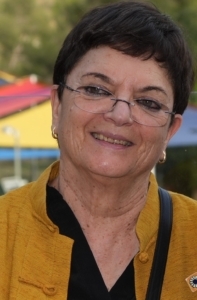
Advisory Board Member
Naama Goren-Inbar
The Hebrew University of Jerusalem, Israel
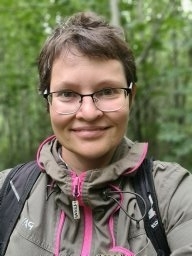
Advisory Board Member
Lyudmila Shumilovskikh
Georg-August-University Göttingen, Germany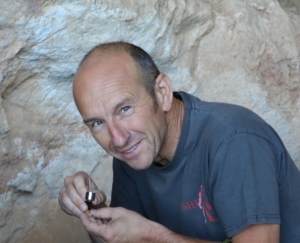
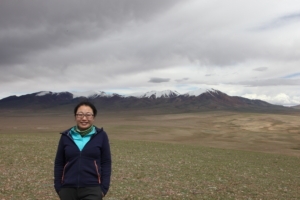
Advisory Board Member
Xiaoling Zhang
Chinese Academy of Sciences, Beijing, China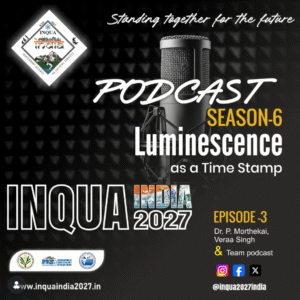 Podcast INQUA India 2027
Quaternary is the age when modern recognisable humans started inhabiting this planet. All over the world scientists are engaged in studying various aspects of human evolution. Once every 4 years scientists from all across the…
 INQUA Travel Grants for the XXII INQUA Congress 2027
Travel grants now open!
 8th Regional Meeting on Quaternary Geology, Slovenia – Call for abstracts
The event will take place from 4–6 November 2026 in Čatež ob Savi, East Slovenia.
 ONSEA Workshop 2026 – Online Event
The ONSEA workshops, originally planned in Morocco, will be switched ONLINE on 3-4 September 2026.
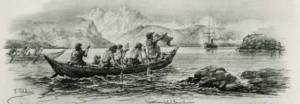 Workshop on the impact of climate and environmental change on the peopling of southern South America (CLIMPEOP-SSA)
Lumen, Paris-Saclay University, France – 16-18 September 2026
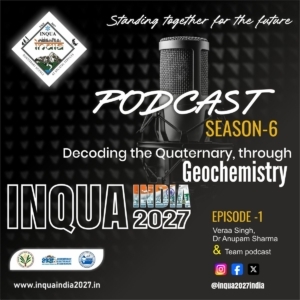 Podcast INQUA India 2027
Quaternary is the age when modern recognisable humans started inhabiting this planet. All over the world scientists are engaged in studying various aspects of human evolution. Once every 4 years scientists from all across the…
Scientific Journals